
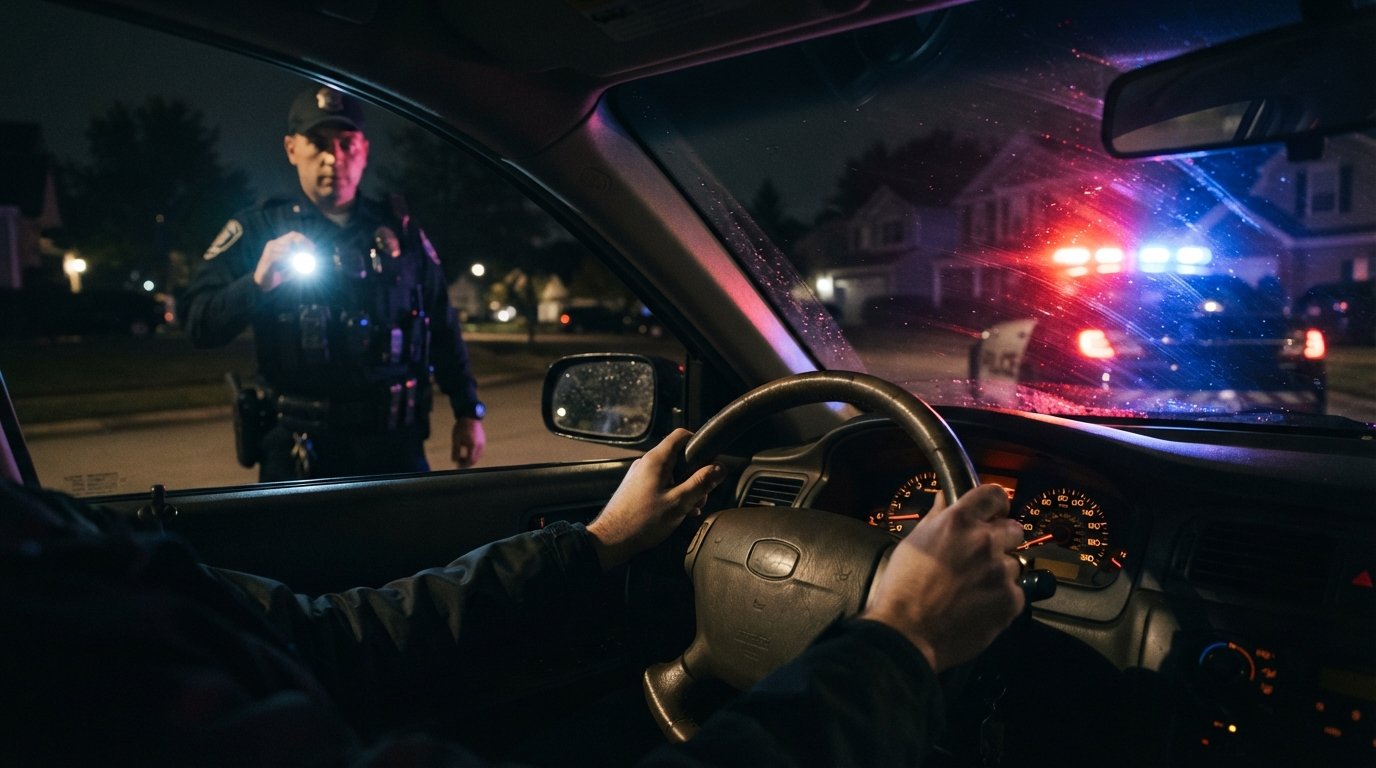
DUI Stop Rights: What to Do When Questioned by Police
Know your rights at a DUI stop: what to provide, what to decline, and how implied consent affects you. Call (833)-248-4565 for a free case review.

By Alice Adler
You see the flashing lights in your rearview mirror, and your heart drops. Whether you have had one drink or none at all, a DUI stop is a high-stress encounter that can shape the next several months of your life. Knowing your rights and how to respond before the officer reaches your window is not about gaming the system. It is about protecting your ability to mount a fair defense later. This guide walks you through what you must provide, what you can politely decline, how implied consent laws work, and why the smallest details of a roadside conversation can matter in court. If you are facing a DUI charge, you can also request a free case review to understand your options before deciding on representation.
Know Your Rights Before the Officer Reaches Your Window
The Fourth Amendment protects you from unreasonable searches and seizures, and the Fifth Amendment protects you from being forced to incriminate yourself. During a traffic stop, however, the practical reality is more nuanced. An officer may order you out of the vehicle, ask for your license and registration, and observe your behavior. What you say and do in those first few minutes will be documented and may be used against you. Understanding the difference between a lawful request and a request you can decline is the foundation of a smart response.
You are not required to answer questions like "Have you been drinking?" or "Where are you coming from?" beyond the basic identification the state requires. You are required to provide your license, registration, and proof of insurance when asked. You are not required to perform field sobriety tests or take a preliminary breath test before arrest, though refusing has consequences under implied consent laws. The key is to remain calm, polite, and consistent. Hostility or silence without explanation can escalate the encounter and hurt you later.
Remember that anything you say can be used in court. Casual remarks like "I only had two beers" or "I am not drunk" become evidence. If you choose to decline a request, do so respectfully and clearly. For example, say "I respectfully decline to answer that question" or "I do not consent to that search." This preserves your rights without giving the officer a reason to claim you were uncooperative.
What You Must Provide and What You May Politely Decline
States generally require drivers to produce a valid driver's license, vehicle registration, and proof of insurance upon request during a traffic stop. Failure to provide these documents can lead to additional citations or even arrest in some jurisdictions. This is a strict legal obligation, and there is no right to refuse it. Beyond that, the officer's questions and requests fall into a gray area that varies by state and circumstance.
You may decline to answer questions about where you are going, where you have been, or whether you have consumed alcohol. You may decline to perform standardized field sobriety tests, which typically include the walk-and-turn, one-leg stand, and horizontal gaze nystagmus tests. You may decline a preliminary breath test at the roadside, though this is different from the evidentiary breath or blood test that follows a lawful arrest. You may also decline consent to a search of your vehicle, though the officer may still conduct a search if probable cause exists or if the search falls within an exception to the warrant requirement.
Here is a quick breakdown of common requests and your rights:
- License, registration, and insurance: You must provide these. Refusing can lead to additional charges.
- Questions about drinking or destination: You may decline to answer politely. Use a clear statement such as "I prefer not to answer that."
- Field sobriety tests: You may decline, but the officer may treat the refusal as evidence of impairment. This is a strategic decision best discussed with counsel.
- Preliminary breath test: You may decline, but implied consent laws may penalize refusal of the post-arrest evidentiary test.
- Vehicle search: You may decline consent. Say "I do not consent to a search." The officer may still search if probable cause exists.
These choices are not without consequences. Refusing field sobriety tests can be used against you in court, and refusing a chemical test after arrest triggers license suspension penalties under implied consent laws. The right approach depends on the facts of your case, which is why consulting an attorney early is so important.
How Implied Consent Laws Affect Test Refusal
Every state has an implied consent law. By obtaining a driver's license, you automatically consent to chemical testing of your breath, blood, or urine when an officer has reasonable grounds to believe you were driving under the influence. This does not mean you must submit to every test requested at the scene. It means that after a lawful arrest, refusing an evidentiary chemical test carries automatic administrative penalties, often including license suspension for a set period.
The penalties for refusal vary widely. In many states, a first refusal results in a license suspension of one year or more, and subsequent refusals carry longer suspensions. Some states allow the refusal to be used as evidence of consciousness of guilt in a criminal trial. In others, refusal may be a separate civil infraction. The arresting officer is required to inform you of the consequences of refusal, though the exact warning varies by jurisdiction.
Field sobriety tests and preliminary breath tests are generally not covered by implied consent in the same way. You can typically decline these roadside tests without triggering the same administrative suspension, though the officer may still arrest you based on other observations. The decision to refuse a post-arrest chemical test is a serious one. On one hand, refusing may deprive the prosecution of direct evidence of your blood alcohol concentration. On the other hand, the refusal itself may be used against you and will likely result in an automatic license suspension. An experienced DUI attorney can help you weigh these tradeoffs based on your state's law and the facts of your stop.
Why Field Sobriety and Roadside Questioning Matter for Later Defense
The roadside encounter is often the most heavily litigated part of a DUI case. Officers are trained to administer standardized field sobriety tests, and the results are used to establish probable cause for arrest. However, these tests are not perfectly reliable. Factors such as uneven pavement, weather conditions, the driver's age, weight, and medical conditions can affect performance. The horizontal gaze nystagmus test, for example, can be influenced by certain medications or eye conditions. A skilled defense attorney will scrutinize whether the officer administered the tests correctly, whether the conditions were fair, and whether the results were interpreted accurately.
Roadside questioning is equally important. The officer's report will summarize what you said and how you behaved. Inconsistencies, admissions, or signs of impairment will be highlighted. If you declined to answer questions, the officer may note that you were uncooperative, but a polite refusal is protected. If you submitted to field sobriety tests, the video or audio recording (if available) may reveal that you performed better than the report suggests. Preserving and reviewing this evidence is a critical part of building a defense.
Documentation matters. Write down everything you remember as soon as possible: the time, location, weather, the officer's name and badge number, the questions asked, and your responses. Note whether you were read your Miranda rights and when. If there were witnesses, get their contact information. If you were injured or had a medical condition that affected your performance, document it. This information can help your attorney identify weaknesses in the prosecution's case.
Safe Ways to Document the Encounter and Contact Counsel
You have the right to remain silent and the right to an attorney. If you are arrested, invoke your right to counsel clearly and unequivocally. Say "I want to speak with a lawyer" and stop answering questions. The officer should stop questioning you once you invoke that right. If you are not under arrest, you can still decline to answer questions and ask whether you are free to go. If the officer says you are not free to leave, you are likely being detained, and the encounter has escalated to an arrest or investigative detention.
Documenting the stop safely means avoiding confrontational behavior. Do not physically resist, do not flee, and do not argue with the officer. Keep your hands visible and move slowly. If you are recording the encounter, know your state's laws on recording police. In many states, you have the right to record as long as you are not interfering. If you are unsure, ask the officer whether you are being recorded and whether you may record. If you are not allowed to record, do not push the issue. Your safety and the safety of others comes first.
After the stop, gather your documents and write a detailed timeline. Contact a DUI attorney as soon as possible. Many offer free consultations and can explain the potential penalties, the strength of the evidence against you, and the available defenses. If you are unsure where to start, a free legal help and attorney-matching service like GoFreeLegal.com can connect you with participating DUI attorneys in your area at no cost and with no obligation. Having a lawyer review the stop can make the difference between a conviction and a dismissal.
Steps to Take Immediately After a DUI Stop
The hours and days following a DUI stop are critical. Deadlines for challenging a license suspension are often short, sometimes as little as ten days. Evidence can disappear, and memories fade. Taking the right steps early can preserve your options and improve your chances of a favorable outcome.
- Write down everything you remember. Include the time, location, officer details, questions asked, tests performed, and your responses. Note any medical conditions or medications that could have affected your performance.
- Preserve evidence. Save any receipts, dashcam footage, or witness contact information. If you were injured, seek medical attention and keep the records.
- Contact an attorney promptly. Many DUI attorneys offer free case reviews. Ask about the license suspension deadline and the potential defenses in your case.
- Do not discuss the case online. Social media posts, texts, and emails can be used as evidence. Keep the details private until you have spoken with counsel.
- Attend all required court dates. Missing a court date can result in a bench warrant and additional charges. If you cannot attend, contact the court in advance.
These steps are not a substitute for legal advice, but they can help you avoid common mistakes that make a difficult situation worse. A DUI charge is serious, but it is not hopeless. With the right information and timely action, you can protect your rights and work toward the best possible resolution.
Facing a DUI stop is frightening, but you are not without options. Knowing what you must provide, what you can decline, and how implied consent laws work puts you in a stronger position. Document the encounter carefully, contact an attorney early, and remember that a free, confidential case review is available through GoFreeLegal.com. The sooner you act, the more time you have to build a defense and protect your future.