
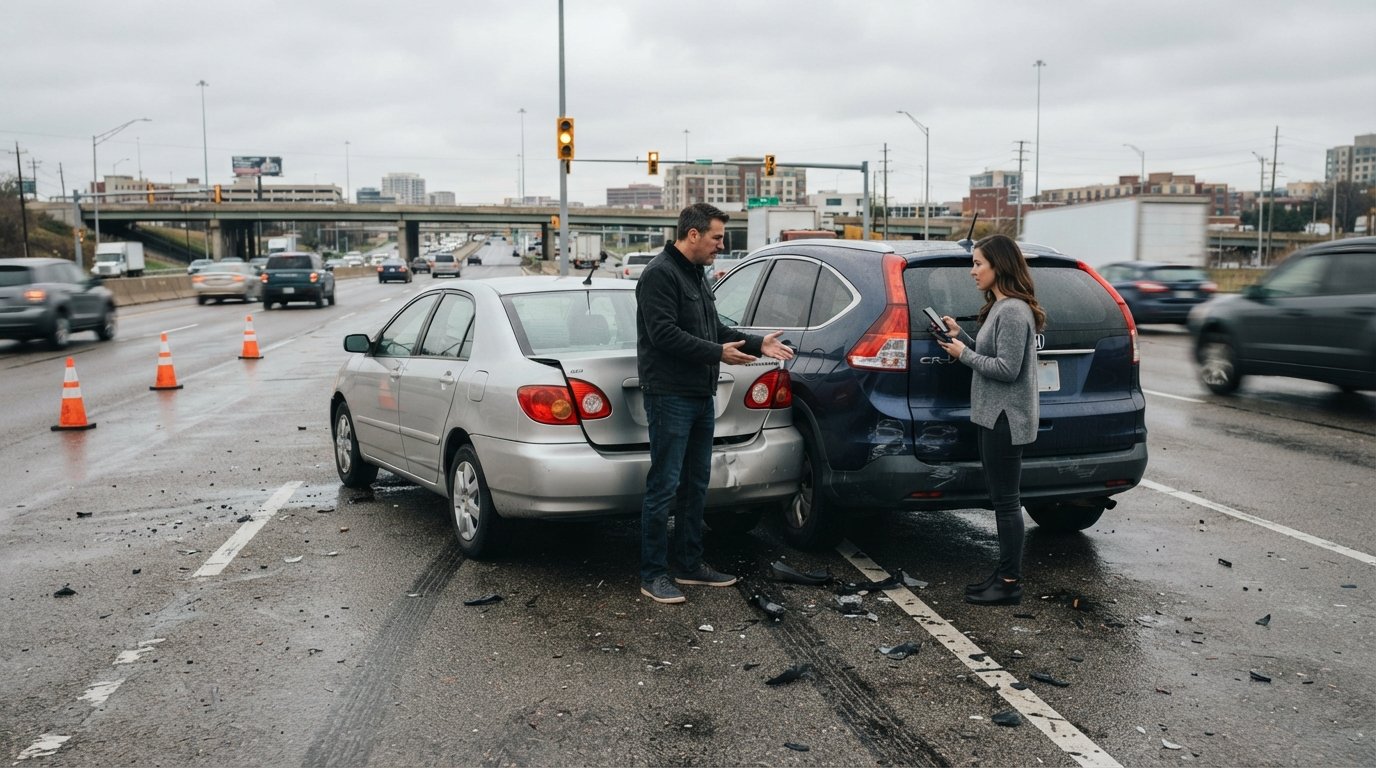
Legal Rights After an Accident Caused by Someone Else
Understanding your legal rights after an accident caused by someone else is crucial. Call (833)-248-4565 for a free case review and protect your claim.

By Jing Park
Every year, millions of Americans are injured in accidents that were not their fault. Whether it is a rear-end collision on the interstate, a slip on a wet grocery store floor, or a workplace incident involving defective equipment, the moments after an accident are chaotic. Amidst the confusion and pain, one critical fact often gets overlooked: you have specific legal rights after an accident caused by someone else. Understanding these rights is not about being litigious; it is about protecting your health, your finances, and your family's future. Insurance companies and at-fault parties have teams of professionals working to minimize payouts. You deserve to know what you are entitled to before you sign anything or accept a quick settlement.
The Foundation: What You Must Prove to Recover Compensation
Before you can discuss damages or fault, you need to understand the legal framework that governs accident claims. In the United States, most personal injury cases are built on the legal concept of negligence. Negligence is not simply the fact that an accident happened. It is a legal standard that requires you to demonstrate four specific elements. If you cannot prove all four, your claim for compensation may fail, regardless of how seriously you were hurt.
First, you must establish that the other party owed you a duty of care. In a car accident, every driver has a duty to operate their vehicle safely and follow traffic laws. In a premises liability case, a property owner has a duty to keep their premises reasonably safe for visitors. Second, you must show that the other party breached that duty. This could mean running a red light, failing to clean up a spill, or texting while driving. Third, you must prove causation: that the breach directly caused the accident. Finally, you must demonstrate that you suffered actual damages as a result. These damages can include physical injuries, property damage, or financial losses.
Gathering evidence to prove these four elements is the most critical task after an accident. Without proof, your legal rights after an accident caused by someone else remain theoretical. This is why it is essential to document the scene, collect witness information, and seek medical attention immediately. Insurance adjusters will look for any gap in this chain of proof to deny or devalue your claim.
Beyond Medical Bills: The Full Scope of Recoverable Damages
Many accident victims make the mistake of assuming their claim is only worth the cost of their medical treatment. While medical expenses are a significant component, the law recognizes a much broader range of losses. Understanding the full scope of damages is essential to maximizing your recovery. If you accept a settlement based only on your initial emergency room bill, you may waive your right to future compensation for ongoing care or lost earning capacity.
Damages in a personal injury claim are generally divided into economic and non-economic categories. Economic damages are tangible and easy to calculate. They include current and future medical expenses, lost wages, loss of earning capacity, and property damage. Non-economic damages are more subjective but equally valid. They compensate you for pain and suffering, emotional distress, loss of enjoyment of life, and loss of consortium (the impact on your relationship with your spouse). In cases involving extreme recklessness, a court may also award punitive damages to punish the wrongdoer and deter future conduct.
To fully protect your rights, you must document both types of damages. Keep every medical record, receipt, and pay stub. Additionally, keep a journal detailing your daily pain levels and how your injuries have affected your ability to perform routine tasks. This documentation serves as evidence when negotiating with insurance companies or presenting your case in court.
How Shared Fault and Comparative Negligence Can Reduce Your Claim
One of the most common defenses raised by insurance companies is that the injured person was partially responsible for the accident. This legal concept is known as comparative negligence or shared fault. The rules vary significantly by state, and understanding them is crucial because they can directly reduce the amount of compensation you receive.
In a pure comparative negligence state, you can recover damages even if you were 99% at fault, but your recovery is reduced by your percentage of fault. For example, if you are awarded $100,000 but found to be 20% responsible, you receive $80,000. In a modified comparative negligence state, you are barred from recovering anything if you are found to be 50% or 51% at fault, depending on the jurisdiction. A few states still follow contributory negligence, which bars recovery entirely if you contributed to the accident in any way.
Insurance adjusters often use shared fault allegations to pressure injury victims into accepting lower settlements. They may claim you were speeding or distracted, even without solid evidence. This is why it is vital to have an attorney who can investigate the accident and push back against unfair blame. Your legal rights after an accident caused by someone else are strongest when you have clear evidence rebutting claims of shared fault.
First Steps to Take in the Days After an Accident to Protect Your Rights
The actions you take in the immediate aftermath of an accident can make or break your claim. Insurance companies are known to investigate quickly, sometimes within hours, to gather evidence that favors their policyholder. You need to act with the same urgency to preserve your legal rights after an accident caused by someone else. Failure to act promptly can result in lost evidence, missed deadlines, and reduced compensation.
Your first priority should always be your health. Call 911 and seek medical attention, even if you feel fine. Adrenaline can mask serious injuries like concussions or internal bleeding. Once you are safe, document everything. Take photos of the vehicles, the scene, and your visible injuries. Exchange insurance information with the other party, but do not discuss fault or apologize. Apologies can be used against you later. Collect contact information from witnesses and ask them what they saw.
Next, notify your own insurance company about the accident. Be honest but stick to the facts. Do not give a recorded statement to the other party's insurance company without consulting an attorney. They may use your words out of context to deny your claim. Finally, consider consulting with a personal injury attorney. Many offer free consultations and work on a contingency fee basis, meaning you pay nothing unless they recover money for you. Services like CheapInjuryLawyer provide free case reviews and connect injury victims with participating attorneys, making it easier to explore your options without upfront costs.
Statutes of Limitations: The Deadline That Can End Your Claim
Every state has a statute of limitations, a strict deadline for filing a personal injury lawsuit. If you miss this deadline, you lose your legal right to sue, no matter how strong your case is. The time limit varies by state and by the type of claim. For most personal injury cases, the statute of limitations ranges from two to four years from the date of the accident. However, there are exceptions. Claims against government entities often have much shorter notice requirements, sometimes as short as 60 or 90 days.
Do not wait until the last minute to seek legal help. Investigating an accident takes time. Evidence can disappear, witnesses can become hard to reach, and memories fade. An attorney needs sufficient time to build a strong case before filing a lawsuit. If you are unsure about the deadline in your state, consult with a legal professional immediately. Protecting your legal rights after an accident caused by someone else starts with knowing your deadlines.
Dealing with Insurance Companies: Tactics to Watch For
Insurance companies are businesses. Their goal is to settle claims for as little as possible. While they may appear friendly and helpful on the phone, their adjusters are trained to protect the company's bottom line. One common tactic is the recorded statement. They may ask you to give a recorded statement about the accident. While you are generally required to cooperate with your own insurer, you are not obligated to give a recorded statement to the other party's insurer. Politely decline and refer them to your attorney.
Another tactic is the quick settlement offer. Shortly after an accident, an adjuster may offer you a check for your car damage or a small amount for your injuries. They may frame it as a gesture of goodwill. Do not cash the check or sign a release without understanding the full extent of your injuries. Once you sign a release, you waive your right to seek additional compensation for future medical treatment or lost wages. Always consult with an attorney before accepting any settlement offer.
When to Hire a Personal Injury Attorney
Not every accident claim requires an attorney. If you suffered a minor injury, your car was repaired quickly, and the insurance company is offering a fair settlement, you may be able to handle the claim yourself. However, there are certain red flags that suggest you need professional help. If you suffered a serious injury, such as a traumatic brain injury, spinal cord injury, or broken bones, you should speak with an attorney. If liability is disputed or if multiple parties are involved, an attorney can help untangle the facts.
If you have missed work for an extended period or if your medical bills are piling up, an attorney can help you pursue compensation for lost wages and future care. Additionally, if the insurance company is delaying the process, denying your claim without a valid reason, or making lowball offers, it is time to bring in a lawyer. Remember that personal injury attorneys work on contingency, so you do not pay upfront. They only get paid if you win.
Frequently Asked Questions About Accident Rights
What if I was partially at fault for the accident? In most states, you can still recover compensation even if you were partially at fault. However, your recovery will be reduced by your percentage of fault. An attorney can help you minimize the blame attributed to you.
How long will my personal injury case take? The timeline varies. Simple cases may settle in a few months, while complex cases can take a year or more. If litigation is required, the process can take longer. Your attorney can give you a better estimate based on the specifics of your case.
Do I need to go to court? Most personal injury cases settle out of court through negotiations with insurance companies. However, if a fair settlement cannot be reached, your attorney may file a lawsuit and take the case to trial.
What if the at-fault driver has no insurance? If the at-fault driver is uninsured or underinsured, you may be able to recover compensation through your own uninsured/underinsured motorist coverage. An attorney can review your policy to determine what coverage is available.
Being injured in an accident caused by someone else is a stressful and overwhelming experience. But you do not have to navigate the legal system alone. Knowing your rights, documenting your damages, and seeking professional guidance when needed can make a significant difference in your recovery. Whether you choose to handle your claim on your own or hire an attorney, take action quickly to protect your rights and secure your financial future.