
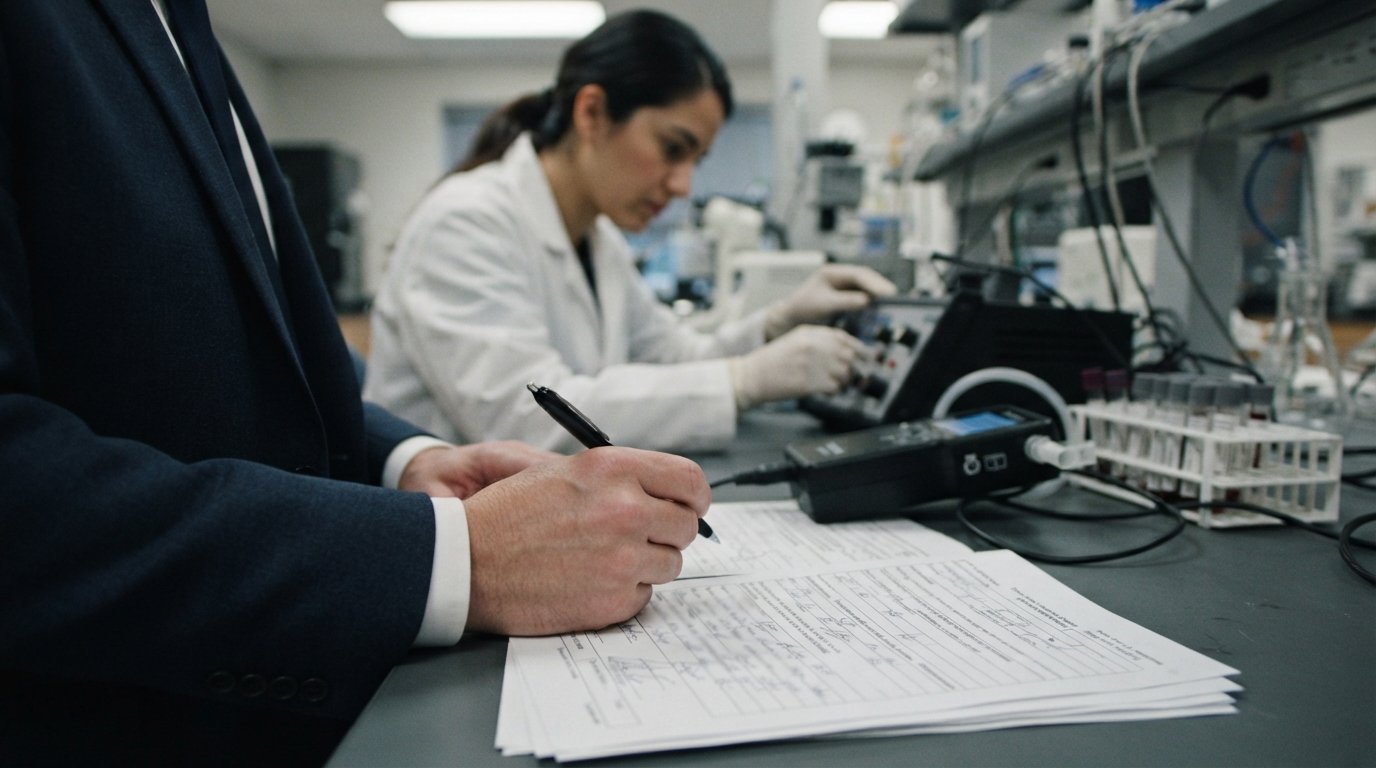
Challenging Breathalyzer and Blood Test Results in DUI Cases
Breath and blood test results can be challenged on calibration, chain of custody, and medical grounds. Call (833)-248-4565 for a free case review.

You were pulled over, asked to blow into a device or provide a blood sample, and now face a DUI charge that hinges on a number. The number feels final, scientific, and impossible to dispute. It is not. Breathalyzer and blood test results are pieces of evidence like any other, and they can contain errors, procedural gaps, and scientific weaknesses that a trained defense attorney knows how to expose. Understanding how these tests work, where they fail, and how challenges are raised in court can change the entire trajectory of a case. This guide walks through the most common attack points on chemical test evidence, from calibration records to chain-of-custody logs, so you can ask better questions and make informed decisions about your defense.
How Breathalyzer and Blood Test Evidence Shapes a DUI Case
In most DUI prosecutions, the chemical test result is the centerpiece of the state's case. Prosecutors use it to establish that a driver's blood alcohol concentration (BAC) exceeded the legal limit, which in most states is 0.08 percent for drivers over 21. Without a reliable number, the state may be left with weaker observational evidence: slurred speech, red eyes, an odor of alcohol, and field sobriety test performance. Those observations can still support a conviction, but they are far easier to contest when the chemical evidence is undermined.
Breath tests and blood tests are fundamentally different in how they measure alcohol, and each carries its own vulnerabilities. Breath testing estimates BAC indirectly by measuring alcohol vapor in exhaled air, then converting that measurement using assumptions about body temperature and the ratio of breath alcohol to blood alcohol. Blood testing measures alcohol directly in a serum or whole blood sample, but the result depends on how the sample was collected, stored, transported, and analyzed. A challenge that works for one type of test may be irrelevant to the other, which is why defense strategy must match the specific evidence in your case.
Courts generally treat chemical test results as admissible if the state can show the instrument was functioning properly and the sample was handled correctly. That foundation requirement is where challenges begin. If the prosecution cannot lay a proper foundation, the result may be excluded or given less weight. Even when the result stays in evidence, a skilled attorney can raise reasonable doubt about its accuracy. The outcome always depends on the specific facts and the jurisdiction, so no two cases follow the same path.
Challenging Breathalyzer Results Through Calibration and Maintenance Records
Breath testing devices are machines, and machines drift. Every state requires breath instruments to be calibrated and maintained according to specific schedules, and every test is supposed to be accompanied by records showing that the device was within tolerance when it was used. Those records are often the first target in a breath test challenge. If the calibration was overdue, the maintenance log is incomplete, or the device failed a recent accuracy check, the reported BAC may be unreliable.
Defense attorneys typically request a wide range of documents during discovery. The following records are among the most valuable when challenging breathalyzer results:
- Calibration and recalibration reports showing when the device was last adjusted and whether it passed.
- Maintenance and repair logs, including any service for sensors, fuel cells, or software updates.
- Accuracy and precision checks performed before and after the test in question.
- Operator certification records proving the officer was trained and authorized to administer the test.
- Device software version and firmware history, since updates can affect measurement behavior.
Beyond the paperwork, the test itself must meet procedural requirements. Most states require a pretest observation period during which the subject is observed to ensure nothing is eaten, drunk, or vomited, because those events can contaminate a breath sample. Many jurisdictions also require a control test or a duplicate sample to confirm the instrument's accuracy. If the officer skipped the observation period, failed to run a required control test, or recorded inconsistent results, the defense can argue the number is not trustworthy.
Breath testing also rests on scientific assumptions that do not hold for everyone. The partition ratio used to convert breath alcohol to blood alcohol is an average, and individuals can vary significantly from that average. Body temperature, breathing patterns, and even recent exercise can shift the reading. Some states allow challenges based on these physiological variables, while others restrict them. An experienced DUI attorney will know which arguments your jurisdiction permits and how to present them persuasively.
Attacking Blood Test Results: Chain of Custody and Collection Errors
Blood testing is often viewed as more reliable than breath testing, but its accuracy depends entirely on proper handling from the moment the needle enters the arm to the moment the lab reports a result. Chain of custody is the documented trail showing who collected the sample, where it was stored, how it was transported, and who analyzed it. A break in that trail creates an opening to argue that the sample was mishandled, contaminated, or even switched.
Common chain-of-custody problems include missing signatures, gaps in time where the sample's location is unknown, improper storage temperatures, and delays in delivery to the laboratory. Blood samples must be preserved with the correct anticoagulant and stored under conditions that prevent fermentation or degradation. If a sample sat in a hot patrol car for hours or was refrigerated improperly, the alcohol concentration may have changed before analysis. Defense attorneys routinely request the full chain-of-custody form, laboratory accession records, and storage logs to look for these gaps.
Collection errors are equally important. Phlebotomists and medical personnel are supposed to use non-alcoholic antiseptics when cleaning the skin before a blood draw. If an alcohol-based swab was used, the sample could be contaminated and produce an artificially high reading. The collection site, the type of tube used, and whether the sample was drawn from a vein or an artery can also affect results. In some cases, the defense may request an independent re-analysis of the retained sample, which can reveal discrepancies between the original lab result and a second test.
Laboratory analysis itself can be challenged. Headspace gas chromatography, the most common method for measuring blood alcohol, requires careful calibration and quality control. If the lab's quality assurance records show calibration failures, expired reagents, or analyst errors, the result may be vulnerable. Some states also have rules about which labs are certified and what documentation must accompany a report. An attorney who understands these technical requirements can cross-examine lab personnel effectively and, when appropriate, present expert testimony to explain the limitations of the testing process.
Factors That Can Skew Chemical Test Accuracy
Even a perfectly calibrated instrument operated by a well-trained officer can produce a misleading result. Human biology and timing play a major role in how alcohol is absorbed and eliminated, and those factors do not always align with the assumptions built into testing devices. Understanding them is essential when challenging breathalyzer and blood test results in DUI cases.
Medical conditions are a frequent source of error in breath testing. Gastroesophageal reflux disease (GERD), diabetes, and certain diets can produce mouth alcohol or acetone that the device misreads as ethanol. Dental work, recent vomiting, and even burping during the observation period can contaminate a breath sample. For blood testing, conditions such as anemia, dehydration, and liver function can affect how alcohol distributes in the body. Some medications and herbal supplements can also interfere with lab assays. A thorough defense investigation will review your medical history, medications, and the timing of your last drink relative to the test.
Timing is another critical variable. Alcohol absorption is not instantaneous. A person who consumed alcohol shortly before driving may have a rising BAC at the time of the stop, meaning the test result could be higher or lower than the actual BAC at the time of driving. In some jurisdictions, this rising-blood-alcohol defense can create reasonable doubt about whether the driver was over the limit when operating the vehicle. Similarly, if the test was administered long after the stop, the result may not reflect the BAC at the relevant moment.
Environmental and procedural factors matter too. Radio frequency interference from police radios and cell phones has been raised as a challenge to certain breath instruments, though courts differ on whether such evidence is admissible. The temperature of the breath sample, the presence of residual mouth alcohol, and the operator's technique can all shift the reading. For blood tests, the type of tube, the preservative used, and the time between draw and analysis can affect the measured concentration. These factors rarely appear on the face of a lab report, which is why discovery requests and expert review are so important.
How These Challenges Are Raised in Court
Challenging chemical test evidence is not a single event. It is a process that begins well before trial and continues through pretrial motions, hearings, and cross-examination. The first step is usually a discovery request for the records discussed above: calibration logs, maintenance records, chain-of-custody forms, lab quality control documents, and operator training files. Some jurisdictions require the prosecution to disclose these materials automatically, while others require a specific request. An attorney familiar with local rules will know how to frame the request to get the most useful documents.
Once the records are in hand, the defense may file a pretrial motion to suppress the test result. Common grounds include an unlawful traffic stop, a violation of implied consent procedures, a failure to preserve the sample, or an inadequate foundation for the instrument's reliability. Suppression hearings often feature testimony from the arresting officer, the lab analyst, and sometimes a defense expert. If the judge finds that the state cannot establish the test's reliability, the result may be excluded, which can significantly weaken the prosecution's case.
Even if the result is not suppressed, the defense can challenge its weight at trial. Cross-examination of the arresting officer can expose gaps in observation, documentation, and testing procedure. Cross-examination of the lab analyst can reveal calibration issues, quality control failures, or chain-of-custody problems. In some cases, the defense will call its own expert witness to explain how a particular medical condition or procedural error could have produced an inaccurate result. The goal is not necessarily to prove the client was sober, but to create reasonable doubt about whether the number is reliable.
It is important to remember that the rules governing these challenges vary widely by state. Some jurisdictions have strict requirements for preserving blood samples, while others allow destruction after a set period. Some courts are receptive to rising-BAC arguments, while others reject them. Some states require the prosecution to show that the breath instrument was calibrated within a specific window, while others are more flexible. Because outcomes depend so heavily on facts and jurisdiction, a generic approach rarely works. Working with an attorney who knows your local courts, prosecutors, and judges is a significant advantage.
For readers who want to understand how legal proceedings unfold more broadly, resources such as LegalCaseReview provide analysis and summaries of notable cases and litigation trends that can help put a DUI prosecution in context. These educational resources are not a substitute for personalized legal advice, but they can make the process less confusing.
Steps to Take When You Want to Challenge Test Results
If you are facing a DUI charge and believe the chemical test result is wrong, the clock is already running. Most jurisdictions have short deadlines for requesting a hearing on your license suspension, and evidence such as blood samples and video footage can be destroyed if not preserved quickly. Taking the following steps can help protect your rights and build a stronger challenge:
- Write down everything you remember about the stop, the tests, and the time frame, including what you ate, drank, and any medications you take.
- Request a free, confidential review of your case through a service like GoFreeLegal.com to understand your options and connect with an attorney who handles DUI defense in your area.
- Ask your attorney to send a preservation letter to the police department and laboratory immediately, so records and samples are not destroyed.
- Gather your medical records and a list of medications, since health conditions and prescriptions can affect test accuracy.
- Follow your attorney's advice about whether to request a hearing, file motions, or negotiate, and attend every scheduled court date.
Each of these steps supports the broader goal of challenging breathalyzer and blood test results in DUI cases: creating a complete record that lets your attorney identify weaknesses in the state's evidence. The earlier you act, the more options remain available. Waiting can limit access to samples, video, and witness memories, all of which may be critical to your defense.
It also helps to understand what you are up against. Prosecutors in DUI cases often rely on the same handful of experts and labs, and they know which challenges courts in their jurisdiction tend to accept. A defense attorney who has handled many DUI cases in your local court will know the patterns, the personalities, and the procedural quirks that can make or break a challenge. That local knowledge is difficult to replicate with general research alone.
Finally, keep expectations realistic. Challenging test results is not a guarantee of dismissal or acquittal. Sometimes the best outcome is a reduction in charges, a favorable plea, or an alternative sentencing arrangement that protects your license and your record. The strength of your case depends on the specific facts, the quality of the records, and the legal standards in your state. An honest attorney will explain the range of possible outcomes rather than promise a particular result.
Facing a DUI charge with chemical test evidence can feel overwhelming, but the numbers are not untouchable. Calibration records, chain-of-custody logs, medical factors, and procedural errors all provide legitimate grounds for challenge when the facts support them. The key is to act quickly, gather the right records, and work with an attorney who understands both the science and the local court rules. A free, confidential case review is a low-risk way to start, and it can help you decide whether to fight the test result, negotiate, or pursue another strategy that fits your situation.